Dialects are not accents. Regional varieties of a language differ enough in vocabulary and structure that a model trained on the standard form performs poorly, and the failure lands on transcription — the first step, where errors propagate into everything after.
Transcription first, because everything depends on it
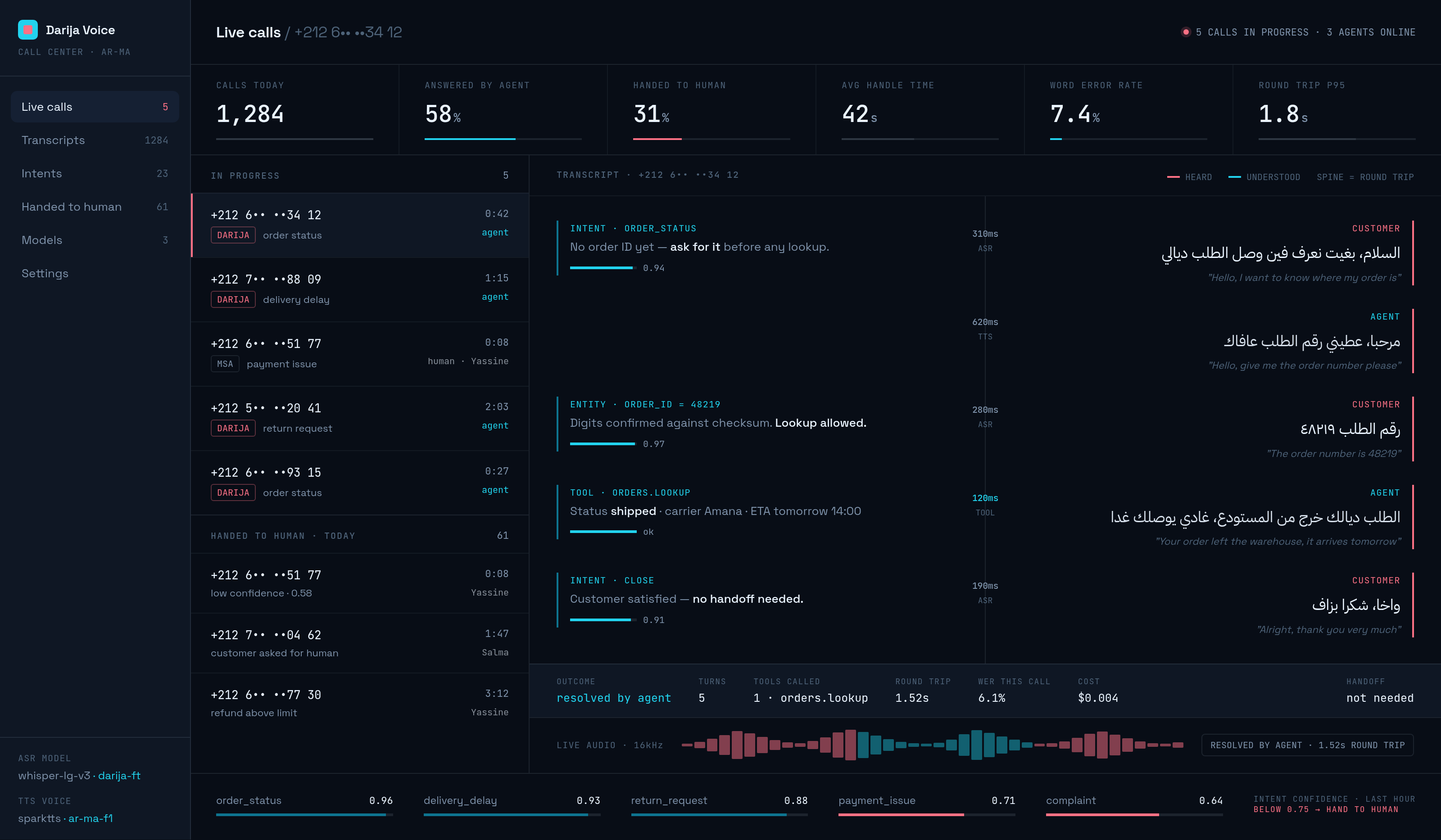
A generic model may sit near an 18% word error rate on dialect call audio. Roughly one word in five wrong breaks intent classification downstream, so no amount of prompt work rescues it. Tuning on real recordings from the actual domain can bring that to about 7%, which is workable.
Keep intent separate from generation
Routing a request is pattern matching; answering it is reasoning. A dedicated classifier over the transcript is faster, cheaper and more measurable than asking the language model to do both — and when it is wrong, you can see exactly where.
The latency budget decides the architecture
Everything above has to fit inside roughly a second and a half, because past that people start talking over the system. Components that cannot meet their allowance get replaced rather than tuned.